Tree Removal Permits on a Spring Hill Lot
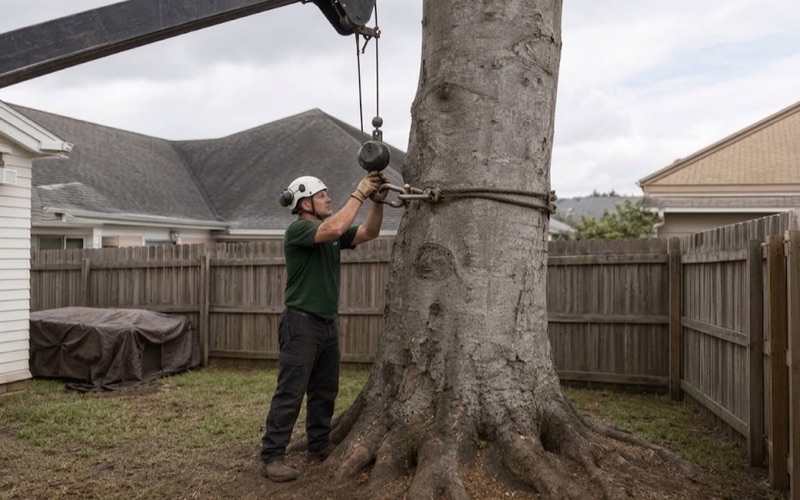
Spring Hill does not require a permit to remove a tree standing on your own private property, so an ordinary residential removal here is a scheduling question rather than a paperwork one. What the city does regulate is when noisy work may happen on permitted construction projects: Ordinance 24-05 allows construction activity Monday through Friday from 7:00 a.m. to 6:00 p.m. and bars it on Sundays and city holidays. On a builder’s site that timetable binds our crew too.
How Murfreesboro, Oak Hill and Forest Hills Differ
Murfreesboro’s tree work permit reaches city property and the treelawn rather than the tree in your back yard, and applications there run at least forty-eight hours ahead with notice to Tennessee One Call. Oak Hill bars removal from a regulated lot until a tree removal permit issues and requires fifty-four percent of predevelopment canopy to be retained. Forest Hills requires a permit on most removals, charges no fee for it, and prohibits clearcutting outright.
Licensing for a Tennessee Tree Service
Tennessee issues no tree care or arborist license at all, which surprises most homeowners. The state contractor license is triggered at $25,000 in materials and labor, and the county-option Home Improvement license has been adopted in nine counties, with neither Maury nor Williamson among them. Credentials here are therefore a matter of insurance and voluntary standing — ISA Certified Arborist, a tree risk assessment qualification, Tree Care Industry Association accreditation — rather than a state card.
A Neighbor’s Canopy Hanging Over Your Yard
Tennessee follows the Hawaii Rule after Lane v. W.J. Curry and Sons, so overhanging branches are neither automatically actionable nor automatically something you have to live with. Shade, dropped leaves, flowers and fruit are treated as natural conditions rather than a nuisance in themselves. What changes the analysis is actual harm, or an imminent danger of actual harm, coming from the encroaching tree.
Trimming to the Property Line at Your Own Expense
Self-help survives in Tennessee: you may cut encroaching branches and roots back to the boundary, and the cost of doing that is yours rather than your neighbor’s. We prune to the line without leaving stubs, since the tree still belongs to somebody else and the cuts will be looked at from both sides. Where cutting to the line would take enough live crown to destabilize the tree, we put that in writing before starting.
When an Encroaching Tree Becomes a Nuisance
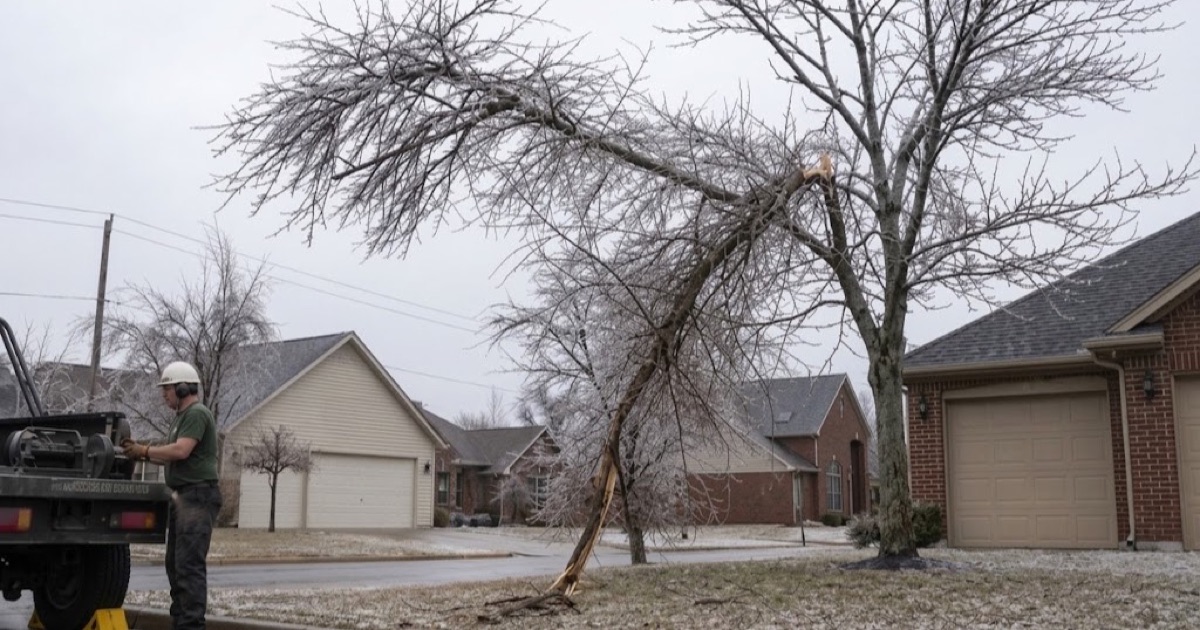
An encroaching tree crosses into nuisance in Tennessee when it causes actual harm or poses an imminent danger of actual harm: a leaning stem over a bedroom, a split union above a driveway, a hung limb above a walkway. That is a condition question rather than an opinion, which is why it is documented instead of argued. A written condition report is what turns it into something a neighbor, an insurer or a court can act on.
The Landowner’s Duty to Inspect Trees
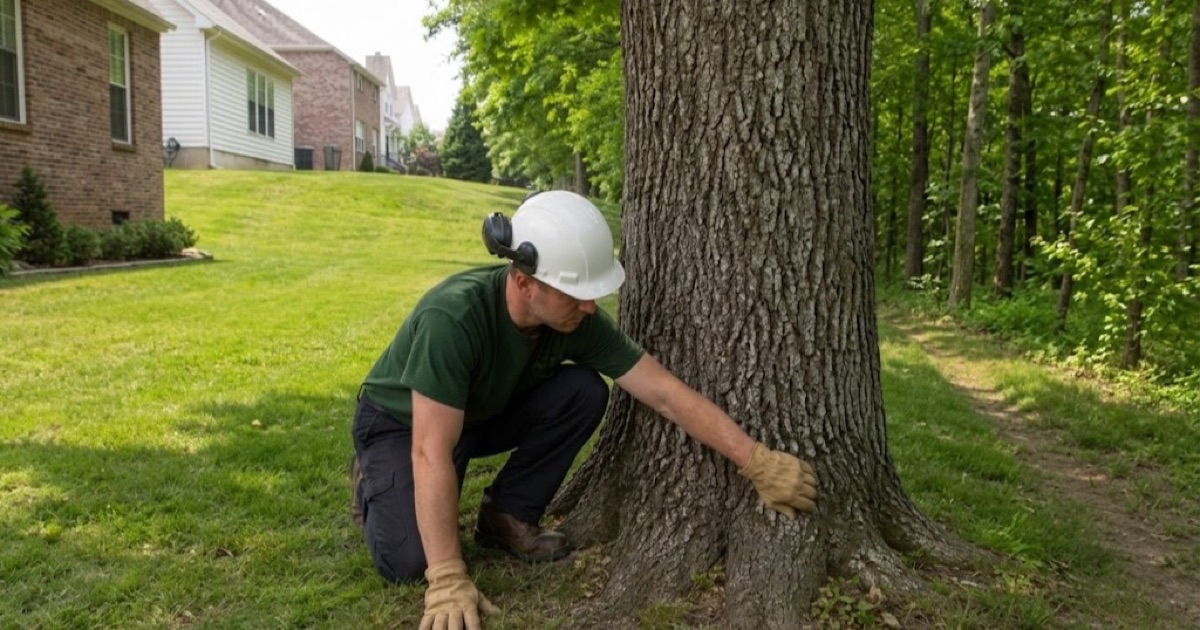
University of Tennessee Extension’s guidance is that an urban Tennessee landowner has a duty to inspect the trees on the premises, which means a defect you could reasonably have found is treated as a defect you knew about. Tree risk assessment exists for exactly that: a documented walk of the property, tree by tree, recording defects, targets and recommendations. Most owners buy the assessment once and then work through it in stages.
Written Notice on a Hazardous Neighbor Tree
Notice is encouraged rather than required in Tennessee, but a dated letter with a condition report attached changes what the other owner can later claim not to have known. We write the report to the tree and the target rather than to the dispute, so it reads the same way to an adjuster as it does to a neighbor. Delivering it is your step; documenting the tree is ours.
Arborist Reports for HOA Review Committees
An architectural review committee generally wants a document rather than a phone call: species, diameter at breast height, condition, the defect found, the recommendation and the reasoning behind it. We produce a written tree condition report a homeowner can hand to an HOA, an insurer or a neighbor without translating it first. It is the same report whether the answer turns out to be remove, prune or leave alone.