
Spring Hill Tree Removal handles brush removal in Spring Hill, TN, serving surrounding cities including Thompson’s Station, Columbia, Franklin, Brentwood and Nolensville, and has been doing it here for more than twenty years. Brush work covers everything below the canopy: shrubs, hedges, volunteer stems, fence lines lost to cedar, and the wooded edge that has crept twenty feet closer to the house since the lot was built.
It is small work with a large logistics component, and that is where most quotes go wrong. Cutting an overgrown bed takes an afternoon; deciding what happens to the material is what sets the price, because a contractor in this city cannot put brush at the curb and cannot tip it in two counties at the same rate.
So our quotes name the destination as well as the work. Chipped and blown on site, chipped and hauled, or mulched in place on acreage are three different numbers, and you should see which one you are buying before the trailer arrives rather than afterward.
Shrubs, Hedges and Overgrown Beds
Hedge Trimming Against Hedge Removal
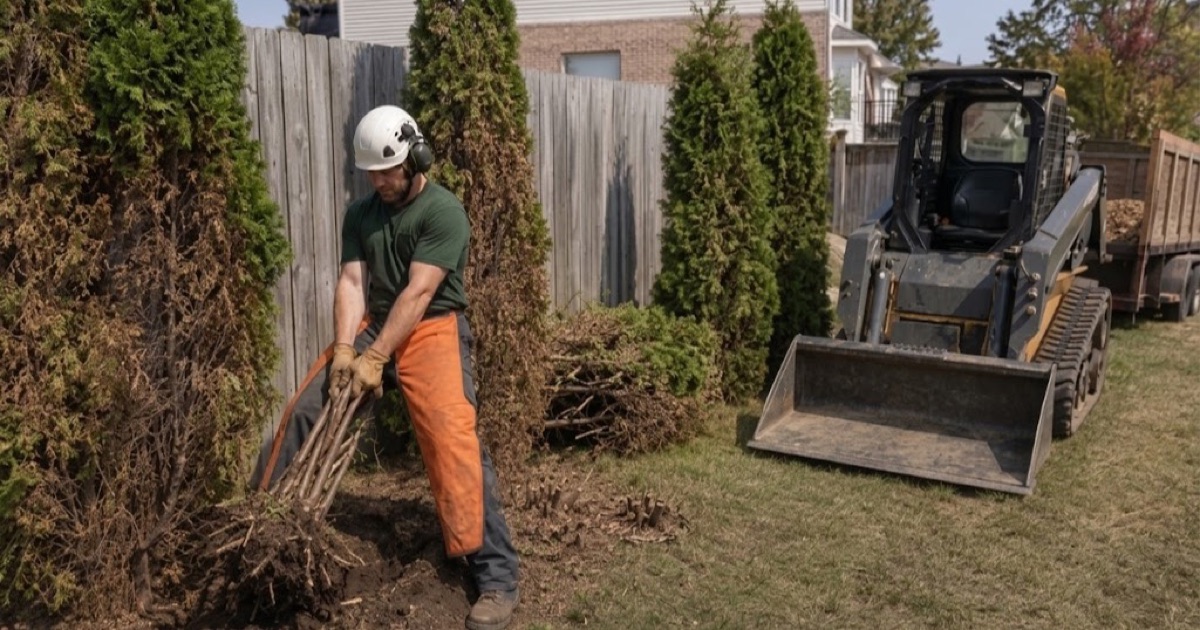
Trimming keeps a hedge at a set size and shape and is a maintenance visit; removal takes the plants and their root balls out and hands back an empty bed. The decision usually turns on species and how far the hedge has gone. A broadleaf hedge that has outgrown its space can often be renovated over two or three seasons, while a conifer screen that has browned out in the interior will not refill and is better replaced than cut back.
Removing Established Shrubs and Their Root Balls
A foundation shrub that has been in the ground for twenty years has a root ball considerably larger than the plant above it suggests, frequently pushed up against footings, downspout drains and irrigation. We take those out with the roots so the bed can be replanted rather than cut at the crown to regrow, and where the plant sits tight to a structure we grind instead of dig. The hole is filled and the bed left level rather than handed over as a crater.
Overgrown Foundation Plantings and Rebuilding a Bed
On the post-1990 lots that make up almost all of this city, the original builder planting is now two decades old and often three times the size it was meant to reach. Cleared properly, that job includes cutting back to the intended bed line, removing what will not recover, taking out the accumulated old mulch that has buried the crowns, and leaving clean soil. What we will not do is shear an oversized planting into a smaller shape and call it finished, because it is back within a season.
Brush, Fence Lines and Property Edges
Brush Clearing Along a Fence Line
A fence line is the first thing lost on acreage and the cheapest thing to keep. Cleared on a cycle it is a machine passing along a run; left for a decade it becomes stems too large for the mulcher, a fence that has to be rebuilt anyway, and a bill several times larger. We price fence lines by the run and tell you what cycle keeps it at maintenance cost.
Volunteer Trees and Invasive Regrowth
The stems that colonize an unmanaged edge here are predictable: eastern redcedar, which takes over any pasture left unmown and thrives on thin soil over limestone, along with tree of heaven, Callery pear escaped from ornamental plantings, and hackberry and winged elm coming up along fences. Cutting them at the base is a temporary answer for several of those, since they resprout vigorously. We say which ones need the stump treated or ground and which simply need cutting.
Wooded Edges, Sight Lines and Drainage Ditches
The useful version of edge clearing is usually a strip rather than an area: pulling the tree line back off a lawn, opening a sight line at a driveway entrance, or clearing a drainage swale that has silted up under brush. Each has a purpose that defines its width, which keeps the job smaller and cheaper than a general instruction to clear. Where a swale or a wet weather conveyance is involved, we check the buffer setbacks the city applies before working in it.
Where the Material Goes, and What That Costs
Chipping On Site Against Hauling Out
A wood chipper turns brush into a material you may actually want, and blowing chips into beds or a pile on site costs nothing to dispose of. Hauling means loading, road time and a gate fee. On a large clearing job a forestry mulcher removes the disposal question entirely by leaving everything on the ground as mulch. The right answer depends on how much material there is and whether you have anywhere to put it.
Why Contractor Brush Cannot Go to the Curb
Spring Hill’s sanitation policy states that contractors dispose of their own debris, and its brush service is for material cut by the homeowner, less than 10 feet in length, at the curb by 6:00 a.m. on Tuesday. Homes on streets platted as private receive no city brush or bulky collection at all and get a $2.35 monthly credit instead. So a pile left at the curb by a crew is a violation rather than a saving, and on a good many streets here it would never have been collected anyway.
Two Counties, Two Gate Prices
This city straddles a county line and disposal is priced accordingly. The Maury County transfer station takes commercial loads at $78.00 per ton with a $25.00 minimum and requires a W-9, a certificate of insurance and a business license on file before a contractor may tip there at all. The Williamson County landfill takes brush, clean wood and chips at $40.00 per ton. Which gate a load goes to is a genuine line in the price, and we quote against the one the job will actually use.
- 20+ Years in Middle Tennessee
- Free Estimates
- Written Scope Before Work Starts